Building Community through Virtual Group Programs
December 2025
Authored by Brandon Cowles, Community Engagement Provider, Recreational Respite. Brandon is a graduate of Canadore College with a Recreation Therapy diploma, and is an enthusiastic Community Engagement Provider at Recreational Respite, developing and delivering meaningful virtual group programs to youth and young adults, and providing tailored one-to-one virtual support.
When people ask me, “What do you do for work?” I tell them I am a facilitator for, “Virtual Recreation Programming.” This often leads to a confused response. This is not surprising considering the word, “Virtual,” can often be confusing, especially as it pertains to a Recreation job. I often feel that I have to advocate for the benefits of this type of approach, because people think it can’t live up to the benefits of, “In-person programming.” These people who believe this, really need to see it in action to gain a full understanding of how effective this method is.
For the last five years, I had the opportunity to facilitate a wide variety of programs for Recreational Respite’s youth and young adult groups. Themes include: Art and Mixed Media, Deep Dive Programs (Learning a wide variety of topics like: insects, reptiles, popular culture) and about the Winter Olympics. Other themes include: Diversity and Cultural Exploration, Community Involvement, Employment Skills, Games and Team Building, Health and Well-Being, Mindset and Identity, Virtual Skills, Online Trips and many more.
The term Virtual means, online; no one is in the same location. At the height of Covid, Virtual really became the norm in terms of the ability to interact with each other. It was then that we discovered the true value of this approach of communication. It allowed participants from every province and territory to connect in a meaningful way. Many of these participants would not be able to access “In-person Programming,” due to rural geographical locations, long wait lists, transportation challenges, and a lack of opportunity or accessibility in their communities. Other barriers to attending in-person groups that our participants have experienced include communication style differences, differences in special interests, executive planning challenges, negative past experiences with in-person groups, sensory and environmental sensitivities, anxiety or overwhelm, and/or a need for predictability and sense of control in social settings.
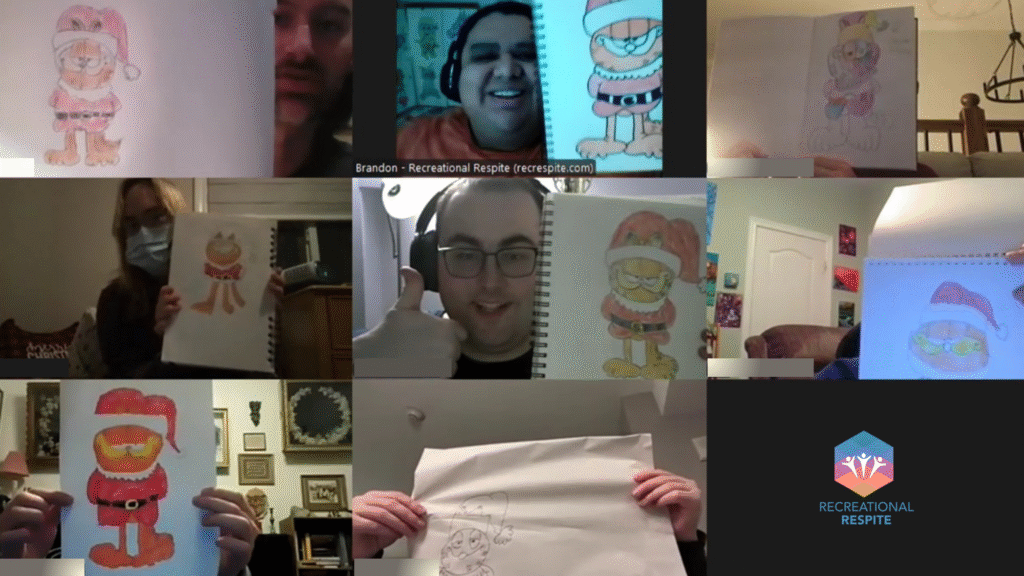
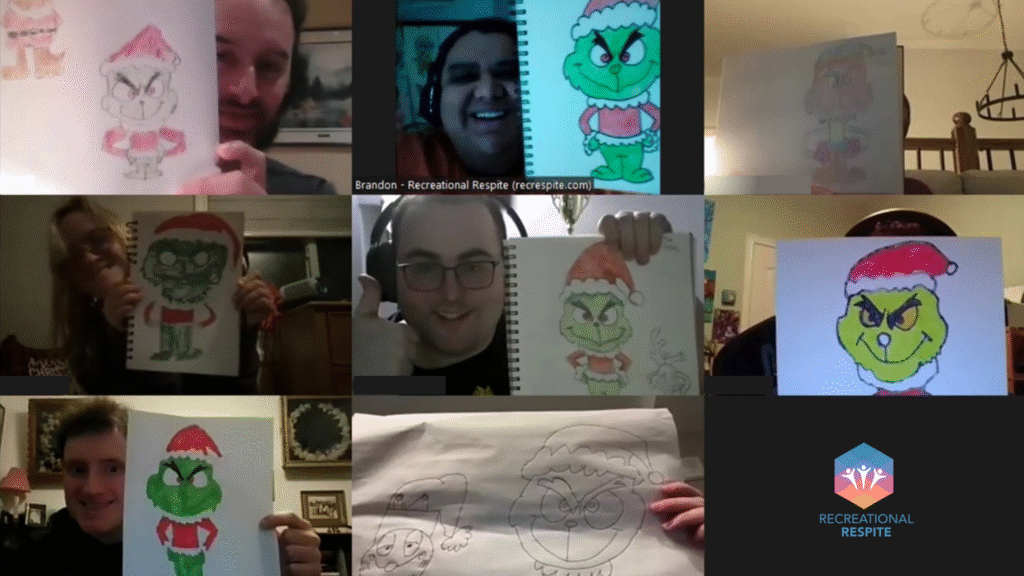
A virtual approach overcomes many of these obstacles, and provides the opportunity to engage in a wide variety of groups with a community of diverse and supportive individuals. For example, one of my favourite programs that I facilitate is called, Learn to Draw. Every Monday evening at 6:30pm ET, a large group of participants from throughout Canada get together to socialize, share laughs and of course, learn and practice their drawing skills. Each week is different, and is based on the group’s interests! I take suggestions on what participants want to draw. These include: video game characters, cartoon characters from movies or shows, famous historical art, animals and even the odd landscape. We draw, and then while everyone is colouring their work, we take the time to check in with each other. This includes: finding out what they have been up to over the weekend in terms of anything exciting, new or fun. The whole group engages in conversations that make this exercise much more than an art activity. It brings people together to share a sense of community, while doing an activity they love.
A few other programs I have facilitated would fall under the category of: Games and Team Building. We have played Bingo, Virtual Board Games, Deal or No Deal, Trivia, Dungeons & Dragons and so many more. While playing these games, it provides participants the opportunity to build a strong sense of community, friendships and to learn to problem solve and work together as a team. Each week, you often will get the same participants back, eager to see one another and share laughs and conversations.
Over the last five years, I have had the pleasure of going on many virtual adventures with many different group members in our Online Trips. For these virtual travel experiences, Recreational Respite develops presentations that are based on the participants cultural/travel interests, and are interactive and engaging. Some of my favourites included a Trip to Ancient Egypt, a Trip to Jurassic Park, and even a trip to the Guatemalan Mayan Ruins. During these trips, we enjoy learning, exploring, and participating in educational discussions and activities. This allows participants to see and learn about our big and diverse world in a way that is accessible, inclusive and entertaining.
Other programs that I have found to be extremely beneficial are programs that fall under the category of: Interpersonal Skills. These programs include: Building Strong Support Systems, Celebrating Group Identity, Dating and Healthy Relationships, Truths and Opinions, Leadership Skills, How to Be a Good Roommate, and Respect for Yourself and Others. We have opportunities to learn and practice in conversations, ask questions, and problem-solve scenarios without judgment and in a safe environment. One example would be as an active listener: paying attention to the speaker, nodding your head, asking questions, being patient and learning to reflect on what is being said. These are techniques that are sometimes challenging to practice in a real-life setting. Having these groups in a non-threatening environment allows for the participants voluntarily participate, grow and practice valuable life skills at their own pace.
In recent years, I have had the pleasure of working with a handful of talented, creative and warm facilitators. Each facilitator brings their own distinctive and unique strengths, experiences and education to provide the best well-rounded facilitation team available. Because everyone brings something different to the table, whether it’s a strong sense of humour, the ability to empathize, knowledge of physical well being, or even culinary skills; participants have the benefit of having a team of competent and knowledgeable facilitators. We are coaches, mentors, listeners, cheerleaders, educators and sometimes unofficial comedians. Each facilitator has learned to adapt activities for all different skill levels and ages. We offer encouragement and create a space for participants to shine.
Every program strives to instill confidence, build self esteem, explore interests, learn and practice new skills – whether that be taking steps towards independent living, vocational success, healthy relationships, healthy lifestyles, and many more. Recreational Respite’s virtual program facilitation eliminates or minimizes many of the participants’ barriers to participation, allowing each to build community, cultivate skills, and take risks at their own pace in a safe and non-judgmental environment. On top of that, participants develop meaningful peer connections, independence and steady and self-paced growth towards each of their individual goals. Every program is designed to ensure these goals are realized through every activity, challenge, discussions and moments of support.
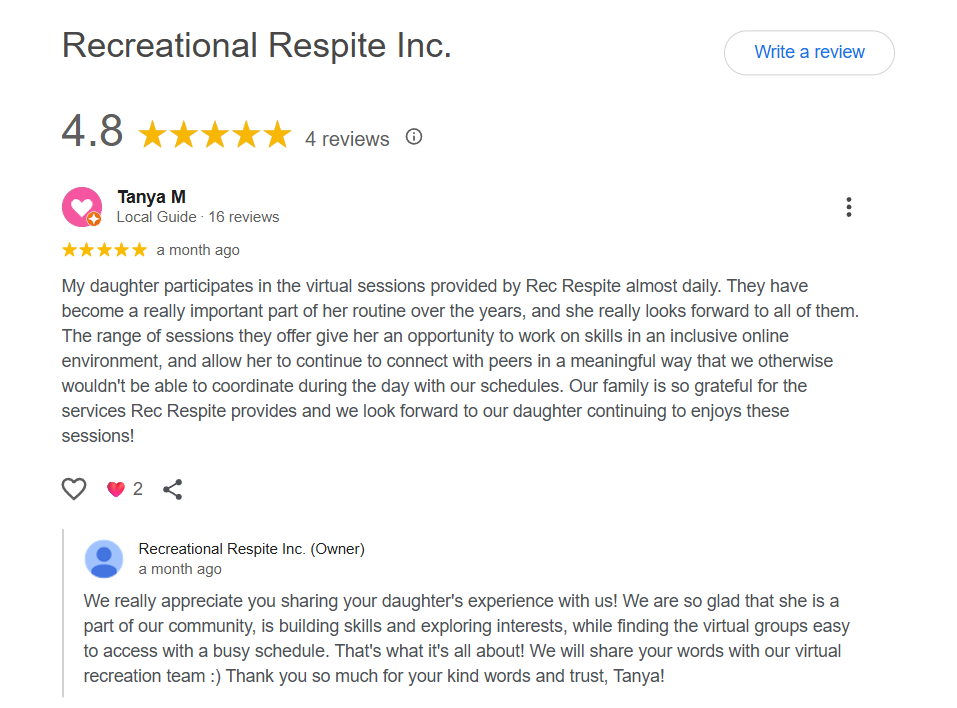
In today’s world, loneliness and isolation have become more common. Connection isn’t just helpful, it is essential. Virtual groups bring people together no matter how geographically distant they may be. Though the computer screen may separate us physically, it hasn’t stopped us from creating a community from Vancouver, BC to St. John’s, NL that is vibrant, strong and full of endless opportunities. There is always an open invitation for any youth or young adult in Canada to join our community! Whether you want to meet new people, build skills, explore interests, try something fun, or simply log in and feel welcome, Recreational Respite’s Virtual groups continue to grow and bring people together.